
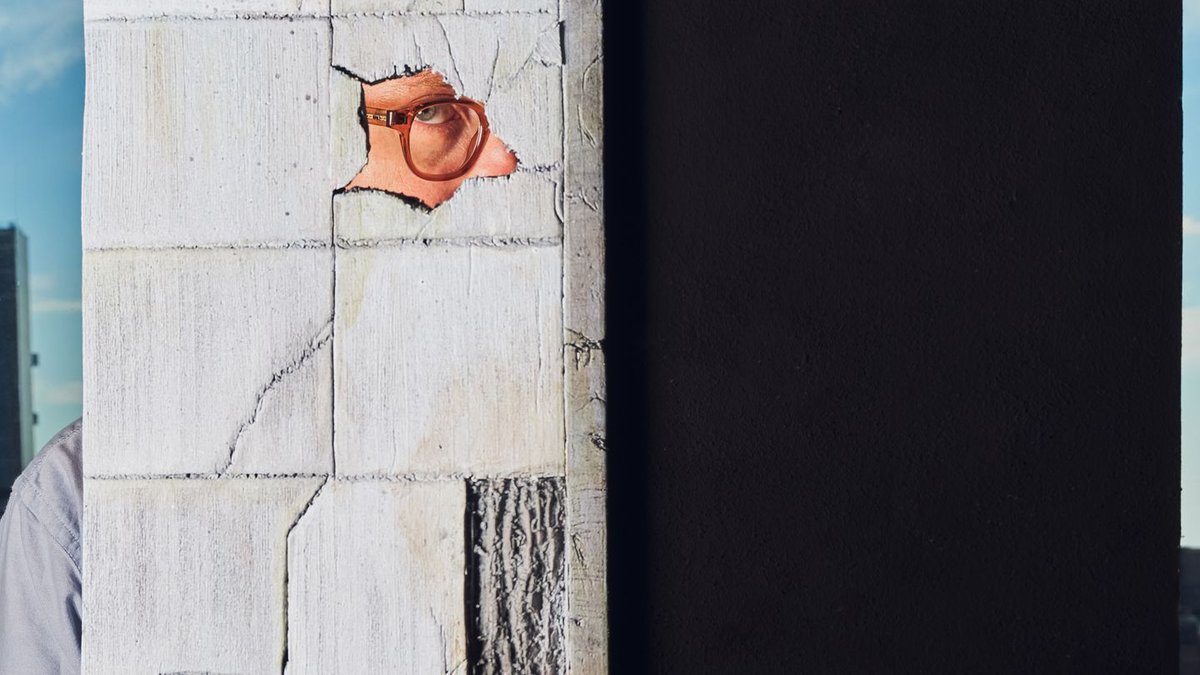
John Wilson’s first feature-length film, The History of Concrete, arrives in theaters on September 18, presenting a premise that may initially strike viewers as unusual—until they recognize the material’s omnipresence. Concrete underpins One World Trade Center, supports the streets of Manhattan where Wilson’s camera often rests, and forms the base of Ridgewood, Queens, his own neighborhood. The film’s release arrives at a critical moment, as the world confronts a pressing question: What happens when the most widely used building material in history begins to deteriorate?
Wilson’s exploration starts in his backyard, where a failing foundation reveals the first cracks in modern concrete’s reputation. Stormwater seeps through patched repairs beneath his patio, exposing a pattern of deferred maintenance. While most homeowners would simply call a contractor, Wilson pursued a deeper inquiry. His investigation led him to ancient Roman concrete still standing in Italy, demonstrating remarkable longevity that starkly contrasts with today’s crumbling urban infrastructure. If concrete can endure for 2,000 years, why does it appear to be collapsing in modern cities?
Read Also: Rock Hudson’s private life and homes
The film mirrors Wilson’s Emmy-nominated HBO series, How to With John Wilson, by blending everyday observations with broader existential questions. In The History of Concrete, he traces the lifecycle of buildings—from the Brooklyn-Queens Expressway, which carries 130,000 vehicles daily and relies on exposed rebar for structural integrity, to the $80 million apartments in 432 Park, where chunks of façade are visibly peeling away. Beyond documenting these failures, the film examines why society accepts such deterioration as inevitable.
Why Concrete’s Collapse Is No Accident
Wilson points to incidents like the partial collapse at Pfizer’s former headquarters as isolated events, but he warns these failures will recur without systemic change.
The film’s visual structure reinforces its themes. Wilson’s camera wanders through New York in a technique urban theorists call dérive, capturing the city’s dual nature—its architectural grandeur alongside its visible decay. His narration guides viewers through these scenes, balancing humor with mounting concern. The levity serves a purpose: it ensures serious points land without overwhelming the audience. Yet beneath the wit lies a troubling question: Is the cycle of construction, decay, and temporary repair an unavoidable pattern, or does it reveal deeper flaws in urban planning?
Read Also: Ghost Adventures Opens Bed and Breakfast at Borden House
Wilson’s perspective draws from urban theory, particularly Jane Jacobs’ The Death and Life of Great American Cities, which he encountered in 2008, and William H. Whyte’s research on how cities fail to meet basic human needs like sunlight, water, and social interaction. Whyte’s findings showed that urban design often neglects these essentials without intentional oversight. Wilson extends this idea: concrete isn’t merely a building material; it’s the framework for modern life, and when it weakens, so does the city’s ability to function.
Urban Theory Meets a 1000-Year Vision
His own experiences shaped the film’s direction. While working on The History of Concrete, Wilson confronted unsettling details about concrete, its vulnerabilities, its financial costs, and its role in both enabling and failing modern urban life. The timing of the film’s release coincides with New York’s announcement of a $4 billion, 10-year plan to rehabilitate the Brooklyn-Queens Expressway, extending its operational life by another 40 years. For Wilson, the challenge isn’t just repair; it’s reimagining how long cities should last. Above all, Wilson brings us a plea to think more deliberately about the urban environment, to imagine the possibility of a thousand-year city, rather than settling for the “50-year” version he believes we’re living in now.
The film opens with a scene where Wilson approaches actor Michael Imperioli, who advises aspiring filmmakers: “To make it as inexpensively as they can, and to get it done.” As Wilson shows us, so too have gone the places made for living.
Read Also: Diane Keaton designed beach house for sale
The Hidden Cost of Concrete’s Empire
Wilson’s examination extends beyond structural failures to the cultural and economic forces shaping urban development. One World Trade Center, where he and a collaborator discussed the film, contains enough concrete to cover 4,000 city blocks, illustrating the material’s dominance in modern architecture. Yet this ubiquity also reveals a paradox: the same substance that supports skyscrapers and highways now shows signs of widespread deterioration. The film’s 100-minute runtime allows Wilson to juxtapose these contradictions, the Trade Center’s core against the exposed rebar beneath the Brooklyn-Queens Expressway, where former traffic commissioner Sam Schwartz warns that collapse is not a matter of if but when, absent intervention.
Wilson’s filmmaking process reflects these tensions. The History of Concrete premiered at Low Cinema, a 40-seat Brooklyn venue he rehabilitated with a partner, a project that embodies the film’s central theme: revitalizing existing structures rather than starting anew. The choice of venue wasn’t accidental; it shows the film’s focus on scale and sustainability. Unlike traditional documentaries that rely on grand narratives or expert interviews, Wilson’s approach centers on ordinary details: gum-streaked sidewalks, sunlight through concrete cracks, and how people adapt to, or ignore, urban decay. These observations accumulate into a portrait of a city that is both resilient and brittle, where the built environment mirrors the priorities and limitations of those who shape it.


Leave a Reply