
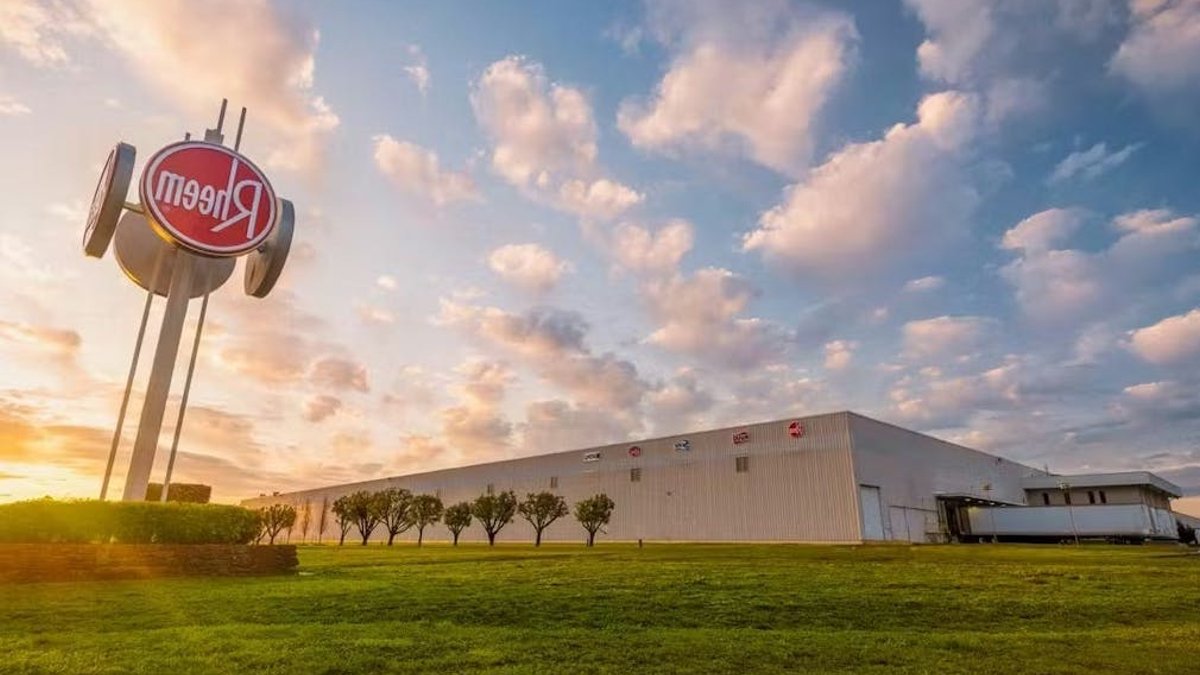
Rheem, a manufacturer of air- and water-heating products, has been in business since 1925. Patrick McLaughlin, a product manager based in Atlanta, recently discussed how the company approaches product design and the changing hydronics market. He spoke about balancing simplicity with connectivity, common installation mistakes, and what contractors are asking for.
How Rheem Balances Simplicity and Connectivity
McLaughlin said that high-efficiency and connectivity should enhance simplicity, not work against it. Products like the Rheem FT Series and IBC boilers are designed to deliver advanced performance while staying straightforward to install, commission, and service. The company handles complexity internally through intelligent controls and diagnostics, presenting contractors with clear interfaces and logical menus.
Related: Radiant Comfort Restores Bozeman Historic Landmark
For larger applications, Rheem ThermaForce and FT Series boilers include controls that support cascading and system integration. Connectivity is applied through the IBC V‑10 Portal, which gives contractors secure remote access for monitoring and managing boilers. The portal allows real-time performance views, error alerts, operational adjustments, and remote diagnostics — often eliminating the need for a site visit. Remote visibility into boiler behavior and historical data helps identify issues earlier and sometimes prevent them.
The V‑10 Portal also lets contractors “check in” remotely before arriving on site, improving service efficiency. Technical support teams can verify settings and assist contractors remotely during setup or troubleshooting.
Common Installation Mistakes in the Field
McLaughlin noted that across brands and product types, most installation challenges come from flawed system fundamentals, not the equipment itself. For boiler applications, he cited issues with improper system piping, venting, inadequate flushing, or failure to maintain recommended water quality standards. Another common problem is incomplete commissioning: high-efficiency boilers need careful attention to gas pressure, combustion settings, and control configuration. Skipping those steps can hurt comfort, efficiency, and long-term reliability.
Related: Expanding Your Plumbing Business in a Sluggish Market
Rheem is investing in clearer documentation, digital tools, and product-specific training for both the Rheem and IBC boiler platforms to address these issues.
Where the Hydronic Heating Market Is Heading
McLaughlin said high-efficiency hydronic heating is changing rapidly, driven by tightening energy regulations and a focus on lifecycle operating costs. Within the boiler market, he expects continued growth in condensing and modulating boilers, especially flexible platforms that serve both residential and light-commercial applications. Boilers like the Rheem ThermaForce are increasingly specified for projects requiring scalability, redundancy, and integration into larger mechanical systems. Across all segments, contractors are looking for equipment that can adapt to a wide variety of applications, including hybrid systems and multi-boiler cascades.


Leave a Reply