
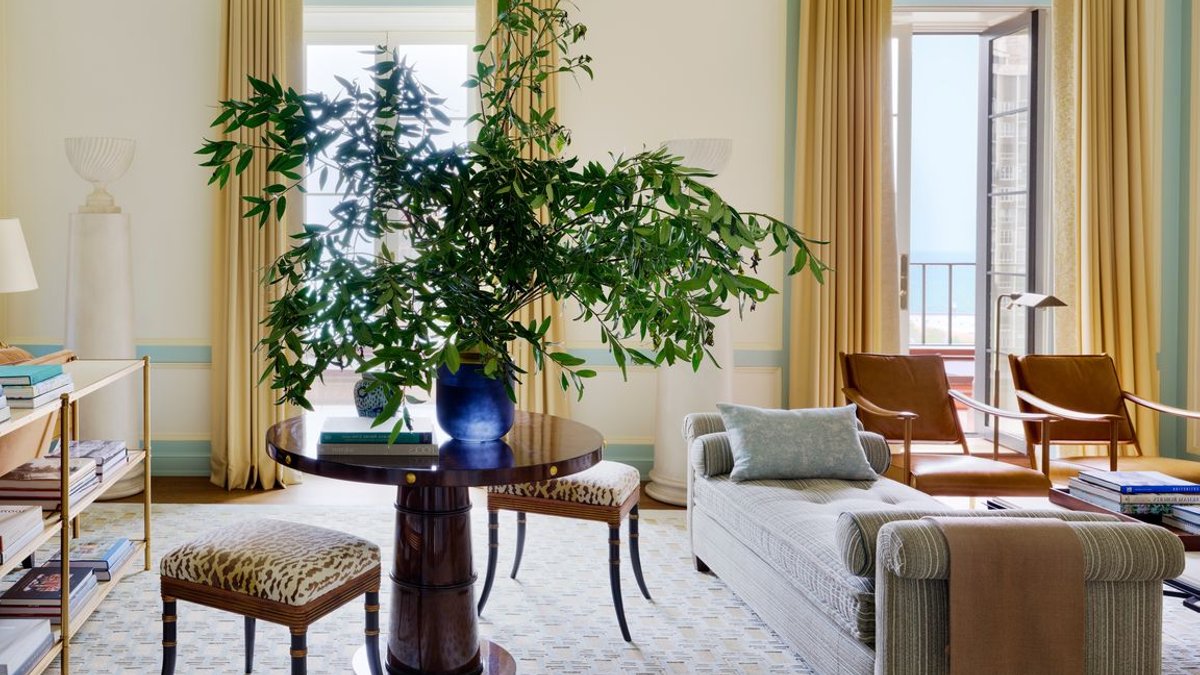
A historic 1920s penthouse duplex in Chicago’s Gold Coast Historic District has undergone a 22-month renovation, blending modern amenities with its original charm.
The 8,000-square-foot apartment, boasting Art Deco features and Lake Michigan views, was transformed by architect Joan Craig and her team at Craig & Company.
Balancing Old and New in a Historic Renovation
The project aimed to create a functional, family-friendly space while preserving the home’s historic integrity. Taylor Stein, a Craig & Co. associate partner, highlighted the challenge of modernizing historic properties, especially kitchens, while maintaining their character.
The renovation involved removing walls to create an open living area, adding a butler’s pantry, and replacing a solarium with a family room and terrace. Pocket doors and windowed sliders provide flexibility, allowing rooms to be open or closed off as needed.
Upgrading Historic Systems
Beyond aesthetics, the renovation addressed the apartment’s mechanical, electrical, and plumbing systems. Molly Gray, cofounder of Gray Salt Construction, emphasized the complexity of integrating modern systems into historic architecture.
The team installed new air handlers, ductwork, and conduits, concealing them behind hidden doors and panels. The apartment now features a Crestron system for lighting, HVAC, audio, and security, designed by Nathan Orsman.
The renovation also involved strategic planning, with a separate demolition permit allowing for early work on the interior while the design team finalized construction documents.
This approach helped identify and address issues within the historic walls, streamlining the process. The team carefully considered which original elements to preserve, such as crown moldings, paneling, and leaded-glass windows, while updating others.
Advanced technology, including 3D modeling, was used to replicate damaged or missing trim. New architectural details, like door casings and moldings, were inspired by the original design, ensuring a cohesive look.
The interior design, led by Craig, focused on creating a comfortable, relaxed atmosphere. A palette of gold, neutrals, and blues was inspired by the surrounding environment and the need for warmth during Chicago’s winters.
The renovation successfully merged the family’s modern lifestyle with the apartment’s historic character, creating a space that is both functional and beautiful.
The project demonstrates how thoughtful planning and attention to detail can preserve a historic home’s essence while adapting it for contemporary living.
By balancing preservation with innovation, the team at Craig & Company has set a new standard for historic renovations, ensuring these spaces remain relevant and enjoyable for generations to come.
The apartment’s transformation highlights the importance of considering both the past and present in architectural design, creating spaces that honor history while meeting the needs of modern families.
With its blend of old-world charm and contemporary convenience, this Gold Coast penthouse stands as a sign of the possibilities of historic renovation.
The project’s success lies in its ability to respect the past while adopting the future, a delicate balance that has been masterfully achieved in this Chicago landmark.
As more historic properties undergo renovations, this case study provides valuable insights into the art of preserving architectural heritage while creating functional, livable spaces.
The renovation of this Gold Coast apartment is a shining example of how to breathe new life into old buildings, ensuring their continued relevance and beauty in the modern world.
By carefully selecting which elements to preserve and which to update, the design team has created a space that is both a tribute to the past and a celebration of contemporary living.
The result is a home that is not only visually stunning but also deeply connected to its history, a true achievement in the field of architectural renovation.
This project serves as an inspiration for architects, designers, and homeowners alike, demonstrating the potential for historic properties to be transformed into modern, functional spaces without sacrificing their unique character.


Leave a Reply