
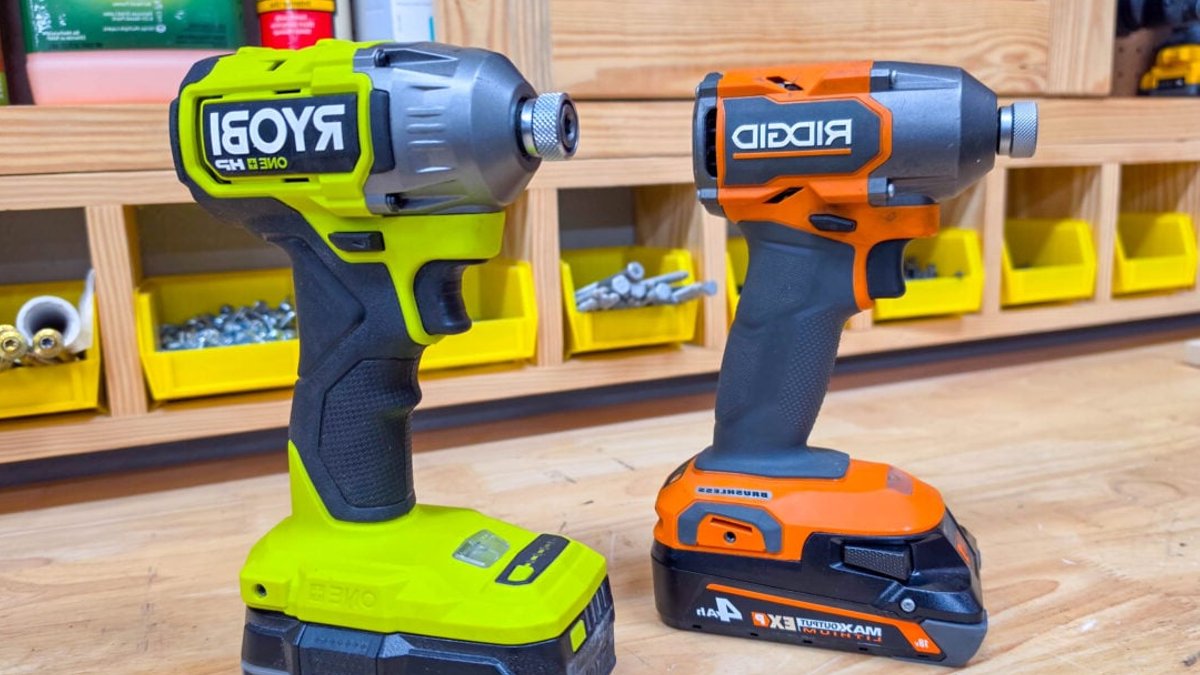
The Ryobi HP Brushless PBLID04 and the Ridgid 18V Brushless R862312 are two of the most popular impact drivers available at Home Depot. They share similar dimensions and bare tool weights, but the testing results reveal a distinct difference in how they perform under pressure.
Technical Specifications and Design
The tools are built almost identically. Both bare tools weigh 2.5 pounds, and the Ridgid model is only slightly shorter in head length. Feature sets are largely the same, including a three-speed setting and a self-tapping mode. The main difference in design is the battery interface, as Ridgid uses a slide pack system while Ryobi relies on a stem pack design.
Price is another factor where the two diverge. The Ryobi PBLID04 retails for $129 bare, whereas the Ridgid R862312 is listed at $149. Kits for the Ridgid model start at $209, while Ryobi does not currently offer a kit option for this specific tool.
Performance in the Field
We tested both drivers using a standard suite of metrics. This included driving three 8-inch GRK RSS screws into stacked OSB and breaking away eight 1 1/2-inch hardened steel lug nuts torqued to 150 ft-lbs. We also ran a difficult lag bolt test on the OSB block.
On paper, Ridgid appeared to have the advantage with a higher max impact rate and slightly more torque. The actual test results, however, tell a different story. Ryobi drove the lag bolt 1.5 inches further into the wood than the Ridgid unit, and it was slightly faster at driving the screws.
While the data shows Ryobi winning on speed and depth, the gap is small. Ridgid managed to break away the lug nuts slightly faster on average, proving it still holds its own as a professional-grade tool. Ridgid’s performance on the lug nuts was impressive, finishing the set of eight in 15.46 seconds compared to Ryobi’s 16.25 seconds.
Related: Pro Tool Reviews Tests Reciprocating Saws Method
Which Tool Is Right for You
Choosing between these two comes down to which battery ecosystem you already own. Ryobi boasts a massive collection of 18V tools that includes everything from drills to outdoor equipment. Ridgid, while having a smaller lineup, offers the tools at a lower price point and includes a three-year warranty with registration.
For a user already invested in the Ryobi system, the PBLID04 is a logical addition. It offers the balance of comfort and performance that many DIYers look for. Ridgid remains a strong contender for those who need a tool that can handle heavy-duty tasks and want the security of a lifetime service agreement.
Ultimately, the Ryobi PBLID04 feels more comfortable in hand. It handles the 4.0Ah Edge battery well and maintains a good center of gravity during use. While the Ridgid R862312 is a capable machine that can hold its own against premium brands, the Ryobi driver offers a better user experience for the money, especially if you can catch a sale on its batteries.
When evaluating power tools, cordless circular saws often share similar design philosophies with impact drivers regarding battery life and ergonomics.
Comparing reciprocating saws requires a similar method of testing under real-world stress.


Leave a Reply