
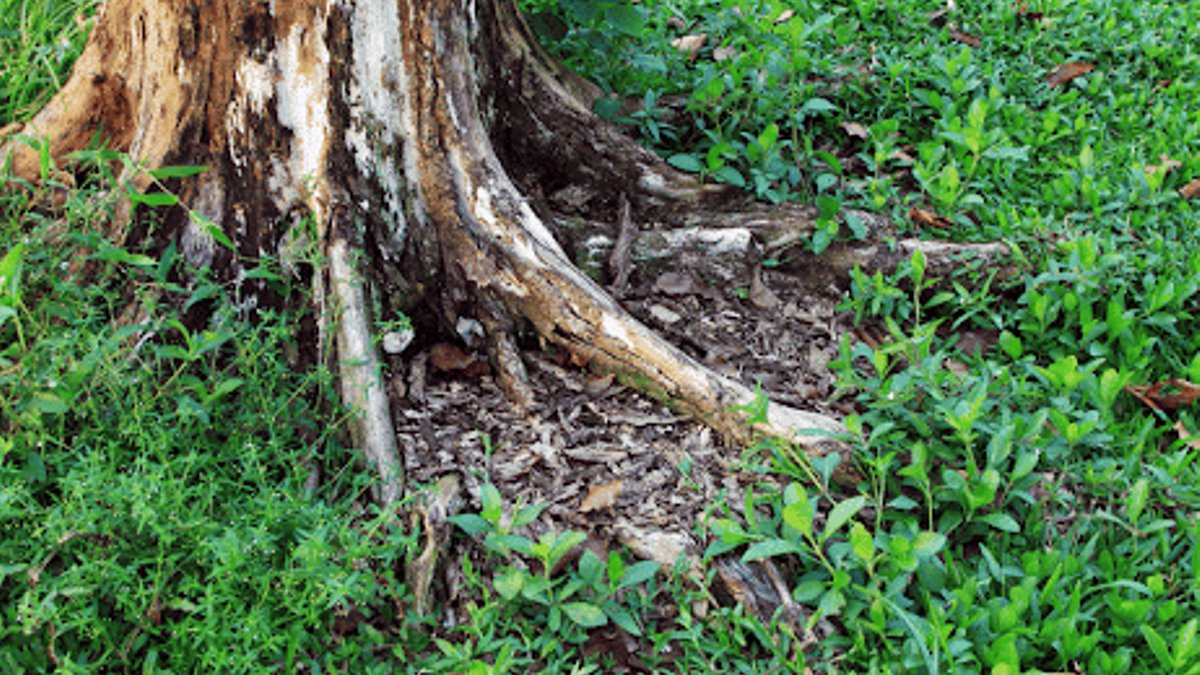
Homeowners looking to tidy up their lawns often need to kill a tree stump effectively while keeping costs low and avoiding damage to surrounding plants.
Natural approaches that work without chemicals
One of the cheapest options uses Epsom salt, which can cut decomposition time from several years to roughly a year. The process calls for drilling holes at least 12 inches deep and about an inch wide, filling them with pure salt, and adding water to aid absorption. After covering the stump with a tarp to keep rain out, the routine is repeated monthly until the wood breaks down. When the method succeeds, the stump typically dies within two to three months and fully rots after about a year. The material costs range from $10 to $20, making it a popular DIY choice.
They also use a simple technique that involves blocking sunlight. By wrapping the stump in a thick, waterproof tarp or a black trash bag and weighing it down with rocks or bricks, growth is halted. This method also takes six months or more to show results but requires little effort beyond the initial cover.
Related: Financing Options for Home Heating Systems Compared
Boiling water can give the stump a shock, especially when many roots are exposed. After drilling holes in the wood and surrounding roots, pouring boiling water until the stump is saturated starts the decay process immediately, though complete breakdown still takes months.
Rock salt is sometimes used to dehydrate the stump, but it can leach into nearby soil and harm other vegetation. The recommendation is to avoid this option near lawns or flower beds, as the salt may prevent future plant growth.
Hands‑on methods for faster removal
For those willing to put in physical labor, digging out a stump remains a reliable, though demanding, technique. Small to medium stumps with shallow roots are best suited for manual removal. The steps include excavating around the base, cutting through larger roots with a hatchet or chainsaw, and pulling the stump free. After removal, filling the hole with soil and topping it with mulch restores the area.
Related: John Sonnhalter Dies at 77
Burning a stump can be swift, but local fire codes often restrict open flames, and gasoline should never be used because it ignites too quickly. A safer approach uses kerosene: drill two‑inch holes at least eight inches deep, fill them with the fuel, let it soak overnight, then cover the stump with dry wood chips and ignite. Monitoring the fire until the wood turns to ash is essential, after which the cavity can be backfilled.
Stump grinding offers the quickest commercial‑grade result. Homeowners can consult online resources about grinding tools. After grinding, the remaining hole is filled with soil and mulch.
Comparing these options to past landscaping trends shows a shift toward environmentally conscious methods. Earlier decades favored heavy machinery and chemicals, but today many homeowners prioritize low‑impact solutions like Epsom salt or manual removal, reflecting broader concerns about soil health and ecosystem balance.
Related: Radiant Comfort Restores Bozeman Historic Landmark
The right choice depends on stump size, desired speed, and budget. A homeowner with a small stump and a few weeks to spare might rent a grinder, while another with a larger budget and time may opt for the salt method. Regardless of the approach, following the outlined steps and respecting local regulations will help ensure the stump disappears without creating new problems.
Homeowners should consider their options carefully.


Leave a Reply