
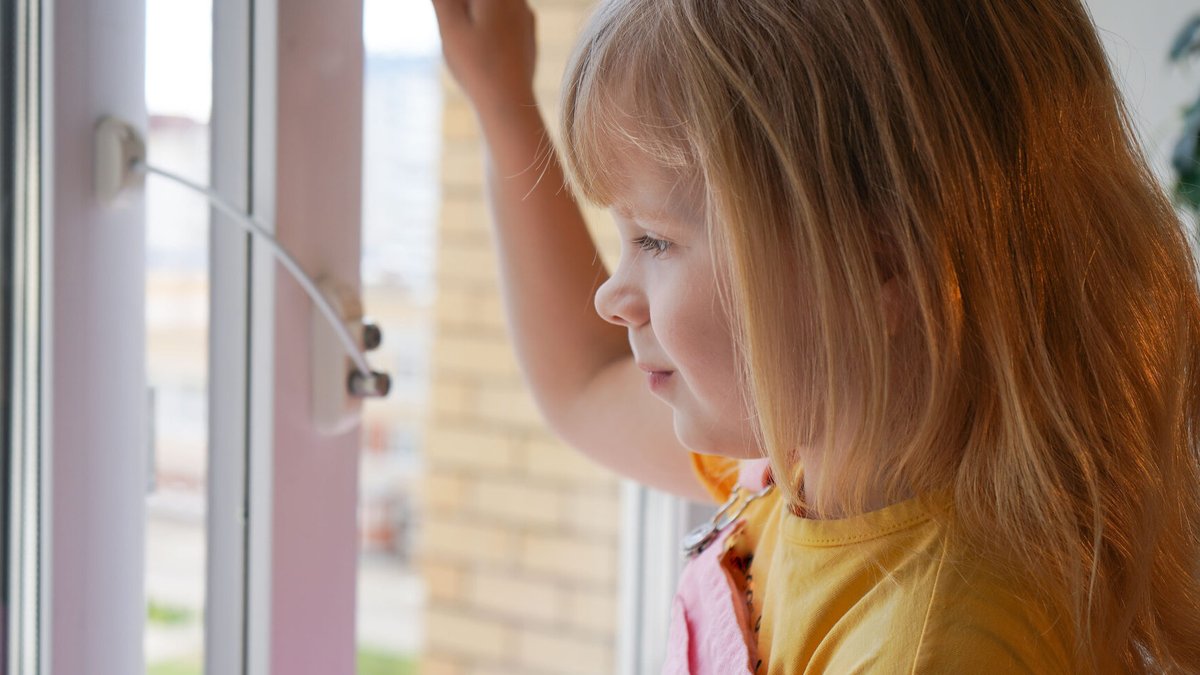
Childproofing windows is a necessary step for parents, but the options can be confusing. Common methods include guards, locks, cordless blinds, and shatter-resistant film, which vary in price and installation difficulty. Window stops are one of the most affordable methods, costing roughly $12 per window. Side-track stops or keyed locks are best for sliding windows, while stops and guards are ideal for double-hung windows. Each year, an average of eight children ages 5 and under die from falling out of windows, and more than 3,300 are injured, according to Safe Kids Worldwide. By implementing a few basic childproofing methods, such as installing cordless blinds or shatter-resistant film, you can sleep soundly knowing your children are out of harm’s way. This is particularly important for second-story homes and nurseries.
Window guards and stops may have different names, but they both accomplish the same overall purpose. Window guards are metal or plastic bars spaced less than 4 inches apart to prevent children from falling through. Stops are smaller and more affordable. They wedge into the window track to block the sash from opening more than a few inches. Some models snap into place, while others need screws. However, both guards and stops need to be removable, since most bedroom windows are designed to function as egress windows (emergency exits). Window guards run about $30–$50, while window stops cost $10–$12, according to Tyler Hull, a licensed contractor with Modern Exterior Roofing in Waukesha, Wisconsin.
Most modern windows come with a lock on the sash, usually a flip lock. However, these locks are relatively easy to unlock, and if your toddler figures out how to use them, you’ll have to upgrade to a more secure model. You could always opt for a keyed lock, which functions much like a front door. Without the key, it’s virtually impossible for your child to open the window. Keyed locks can range from $10 to $20 on retail sites such as Home Depot. Sliding window locks are another option. They fasten to the window track and allow you to limit how far a window can open. These models tighten with a key wrench (or by hand with hand-turn models) and are easy to install DIY for double-hung or sliding windows. Sliding window locks can run anywhere from $5–$15 on retail websites.
Related: Roof Replacement Costs Vary Widely Nationwide
Most traditional window blinds and shades use cords to adjust their position and control the amount of light that comes in, but dangling cords pose a strangulation risk to young children. To childproof your window treatments, consider replacing your existing blinds or shades with cordless models. “Cordless window shades are honestly underrated. Anything with a cord is basically a hazard magnet,” Hull said. Cord-free options feature a tension mechanism that controls the height of the blinds or shades, as well as a wand on one side for opening them up and letting light in. By this simple switch, you can reduce the risk of strangulation altogether. Cordless blinds can range from $10 to $50 or more for standard window sizes. “They install in under 10 minutes. No cords, no questions. If someone insists on blinds, use tension-mounted cord cleats up high and wrap those cords tightly. But truthfully, just go cordless. Easier,” Hull said.
Environmental Hazards and Film Options
One of the simplest ways to childproof your windows (and your home) is to move furniture away from your windows. “Kids push against screens, climb on furniture, or bang things against windows. The danger is not always the hardware. It is the environment around it,” Hull said. Children love to climb, and if there’s anything near your windows, they could potentially climb up and fall out. Instead of purchasing any new products to safeguard your windows, you can always rearrange your furniture setup. Keep cribs, dressers, and chairs away from windows. If you need to place any furniture near your windows, be sure to anchor it to the wall to prevent tipping.
“I’ve picked up the habit of shoving any piece of furniture away from the window — toy bins, beds, you name it — because kids will try to scramble up anything,” said Stephanie Edenburgh, CEO of Bizzie Mommy. Apply shatter-resistant window film. Unlike other childproofing methods, shatter-resistant window film won’t stop the window from opening or keep your child from climbing through, but it can strengthen your window panes, preventing any injuries from broken glass. This method is best for nurseries, bedrooms, and anywhere where there’s a risk of your child bumping into the glass. “Shatter-resistant window film is smart for anywhere glass meets play space. I have installed [it] in dozens of homes where kids have toy-throwing phases. For around $80 to $100 per standard-sized window, you get a layer that holds the glass together when it breaks,” Hull said. Shatter-resistant film isn’t a substitute for window guards or stops, but you can use it in combination with other childproofing methods for additional safety. It can also help you save on glass replacement costs by preventing the glass from shattering in the first place.
Related: Kimco Plumbing renovates historic Eliason Building
Always test any safety feature after installation to ensure it’s child-resistant — and show older kids how to use emergency-release latches if applicable. While all the childproofing methods above can be effective, some work better than others depending on what type of windows you have. Here are some suggestions for what method to use based on your specific windows. Single-hung and double-hung windows are the most common windows in modern houses, so multiple methods work for these setups. Window guards and window stops are the two most effective options for double-hung windows. “Window guards are a no-brainer for double-hung setups. They install right in the frame and block the opening without messing with ventilation,” Hull said. Additionally, window stops are another effective and affordable option, limiting the sash opening so that children can’t climb through.
For sliding windows, side-track stops or keyed locks are best. “Use sliding window locks or stops to prevent the window from fully opening; ensure the locks are placed out of children’s reach,” said Theresa Bertuzzi, chief program development officer and co-owner of Tiny Hoppers. Depending on your casement window sizes, they can be extremely dangerous to children because they open out wide, making them easy to climb through. To childproof them, install lever locks or restrictors. If your casement windows use a crank to open, remove the crank and store it out of reach so that children can’t open the windows at all. “Apply window restrictors or remove handles when not in use to prevent children from opening windows,” Bertuzzi said. Basement egress windows serve as an access point for exiting the house. “Basement egress windows need a different treatment. You want escape routes for emergencies, so do not block them entirely,” Hull said. Some of the most effective methods for these windows are locks that are difficult for children to use. “Ensure egress windows have secure locks that adults can easily operate; avoid placing furniture nearby that children can climb,” Bertuzzi explained.
Falls occur when children climb on nearby furniture and then fall through an open window, open the window themselves, or press through a window screen. Other injuries can happen from falling off a windowsill, getting tangled or strangled in corded blinds, or breaking a window and stepping on the broken glass. “Give toddlers a climbable surface, a loose cord, and almost every emergency scenario starts right there,” Edenburgh said. Some parents believe that open windows in their home are safe because the screen is there to protect their children, but this can be a fatal mistake. Screens are not a safety feature, and they’re not designed to keep your child from falling through. They’re only designed to let air in and keep insects out. Window screens alone are not enough to protect children. Some of the most common places where window accidents occur are places where children sleep and play. “Most slips and bangs settle in bedrooms or playrooms, usually when a parent feels convinced their little one is still tucked away and out of trouble,” Edenburgh added. Homes with older windows that open easily are also prone to accidents.
Related: Private Works Change Order Act Aids Subcontractors
Even if you childproof these areas, it’s still important to keep an eye on your children. “Most accidents happen during transitions. Nap time. After school. When adults are in the kitchen or distracted,” Hull said. By staying close by and keeping watch, you can be the final layer of safety for your children. Neglecting to childproof your windows can prove fatal, especially if you live on the second floor. Luckily, childproofing methods are largely affordable and don’t require any major installations. Still, it’s best to make a childproofing plan before your children are old enough to run around and climb up to your windows. Start by identifying your window types and measuring your windows so you can choose the right size guards or locks. Even the best childproofing products won’t be effective if they’re not the right size for your windows. Once you have taken your measurements and evaluated your window setup, start childproofing high-risk rooms, such as upstairs bedrooms or nurseries. After those areas are secure, you can proceed to common areas, such as the living room, kitchen, and other first-floor spaces. If you’re not sure which method to choose, try several. You can combine tools like window guards with a new furniture placement to double up on safety. Remember, your specific childproofing process may vary depending on your circumstances. “Window safety is not a one-size-fits-all thing. You pick based on window type, child age, and budget. Layer solutions when you can. And when in doubt, overprotect. Kids figure things out fast,” Hull said.
Childproofing FAQs
Are window screens enough to protect kids from falling? No, they’re not. Window screens are designed for ventilation and keeping insects out, not for preventing a child from falling through a window. Can I install window guards myself? In most cases, yes. Many manufacturers create window guards with DIY installation in mind, but it’s important to install them correctly so that they’re secure enough to protect your children. If you’re installing a permanent window guard or if you’re not confident with your DIY skills, you may be better off hiring professionals. Are there child-safe options for blinds or shades? Yes, cordless and motorized models are child-safe alternatives to traditional blinds and shades. Since they don’t have cords to control the opening of the blinds, there’s no risk of accidental strangulation. At what age should I start childproofing windows? Ideally, you want to have all your windows childproofed by the time your little ones are crawling around, so it’s best to start the childproofing process at the first sign of mobility — as early as six to nine months. When in doubt, earlier is always better.


Leave a Reply