
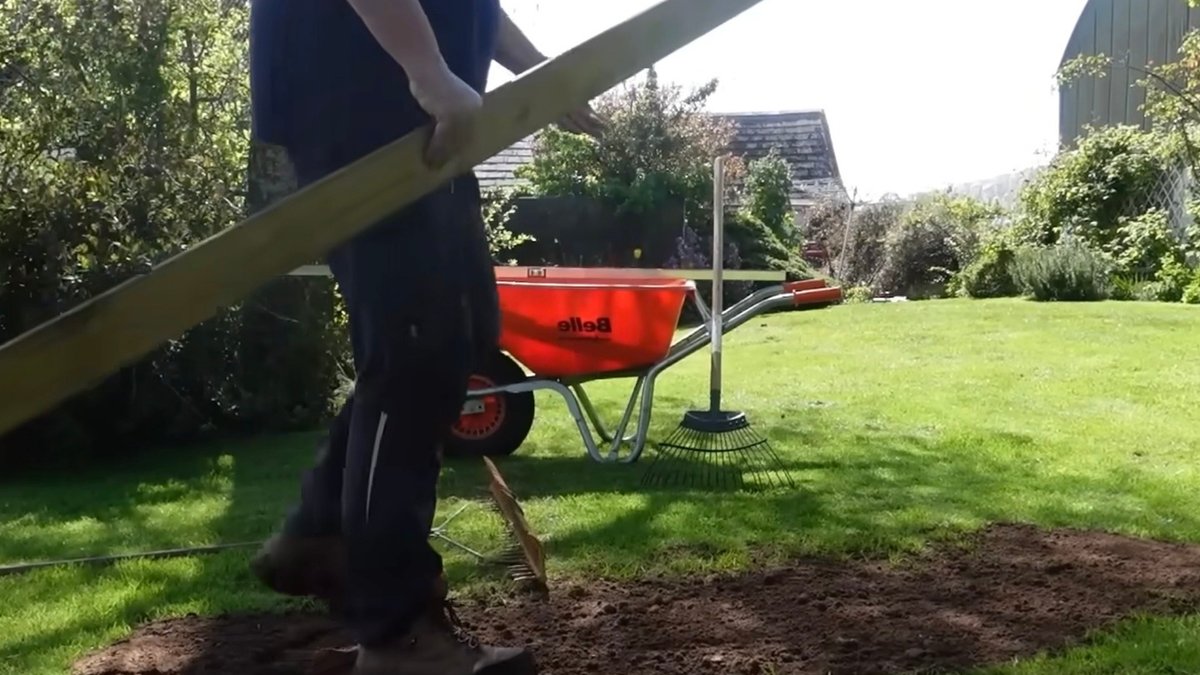
Use an old wood plank and rake to smooth and level your yard, turning an uneven patch into a safe, even surface for play or gatherings.
Identifying Problem Areas
After mowing, the eye can catch darker or soggy patches where the grass looks thinner. Those zones often signal compacted ground or water‑filled depressions that have settled lower than the surrounding turf.
Compaction happens when foot traffic or equipment squeezes soil particles together, preventing air and water from moving freely. Over time the ground can sink, creating a dip that collects runoff.
Another common cause is erosion: rain can wash loose material away, deepening the hollow. Decaying roots also leave voids that settle under the weight of the lawn.
The visual clues are usually a change in color—yellowing or browning grass—and a spongy feel when you press a foot into the area.
Related: Dolly Parton reflects on home and childhood
Preparing the Site
Before adding anything, loosen the compacted earth. A garden fork or a manual aerator works best; push the tines deep enough to break up the dense layer.
It’s easier to see the depressions right after you cut the grass, so plan the work for the same day you mow.
Estimate the volume of material needed.
Dump the first load of topsoil into the hollow and spread it with a rake, then step on it to compact the base. If the depression is shallow, the top layer alone will hold; deeper pits benefit from a compacted sub‑layer of clean fill before the topsoil.
When the soil settles, you’ll notice whether the surface is still lower than the surrounding lawn. If it is, repeat the fill‑and‑pack cycle.
The approach mirrors basic road‑grading techniques, where a straight edge checks evenness.
Related: Rare pink Pyrex dish fetches high price at thrift shops
Step‑by‑Step Leveling Using a Plank and Rake
Lay a straight wooden plank across the hollow, making sure it spans the entire width. The board acts like a screed, showing any high spots that need shaving off.
Add a second layer of soil, then walk along the board, pressing down with your feet. The weight helps settle the fill and reveals gaps.
Slide the plank back and forth; wherever it rocks, add more soil and repeat the foot‑packing. Continue this rhythm until the board rests evenly on the surrounding ground or sits just a touch higher.
When the surface is level, use a rake to feather the edges, blending the new soil with the existing lawn. Finally, broadcast grass seed over the repaired area and keep it moist until the seedlings establish.
Because the board must reach completely across the depression for this to work, a longer piece may be needed for wider patches. The process is simple but can be a bit fiddly, especially when trying to keep the fill from spilling over the sides.


Leave a Reply